Relocation Guide · Miami
Moving to Miami: Neighborhoods, Cost of Living & What to Expect
July 1, 2026 · 7 min read
The Time Sphere may earn a commission from bookings and purchases made through links on this page, at no additional cost to you.
Miami has emerged as one of the most sought-after relocation destinations in the United States, attracting a wave of tech professionals, finance workers, entrepreneurs, and remote workers who discovered the city during the pandemic and never left. Year-round warm weather, Florida's zero state income tax, direct flights to Latin America and Europe, and a vibrant cultural identity make it genuinely compelling. But Miami is also one of the most misunderstood cities in the country. Here is what you need to know before you move.
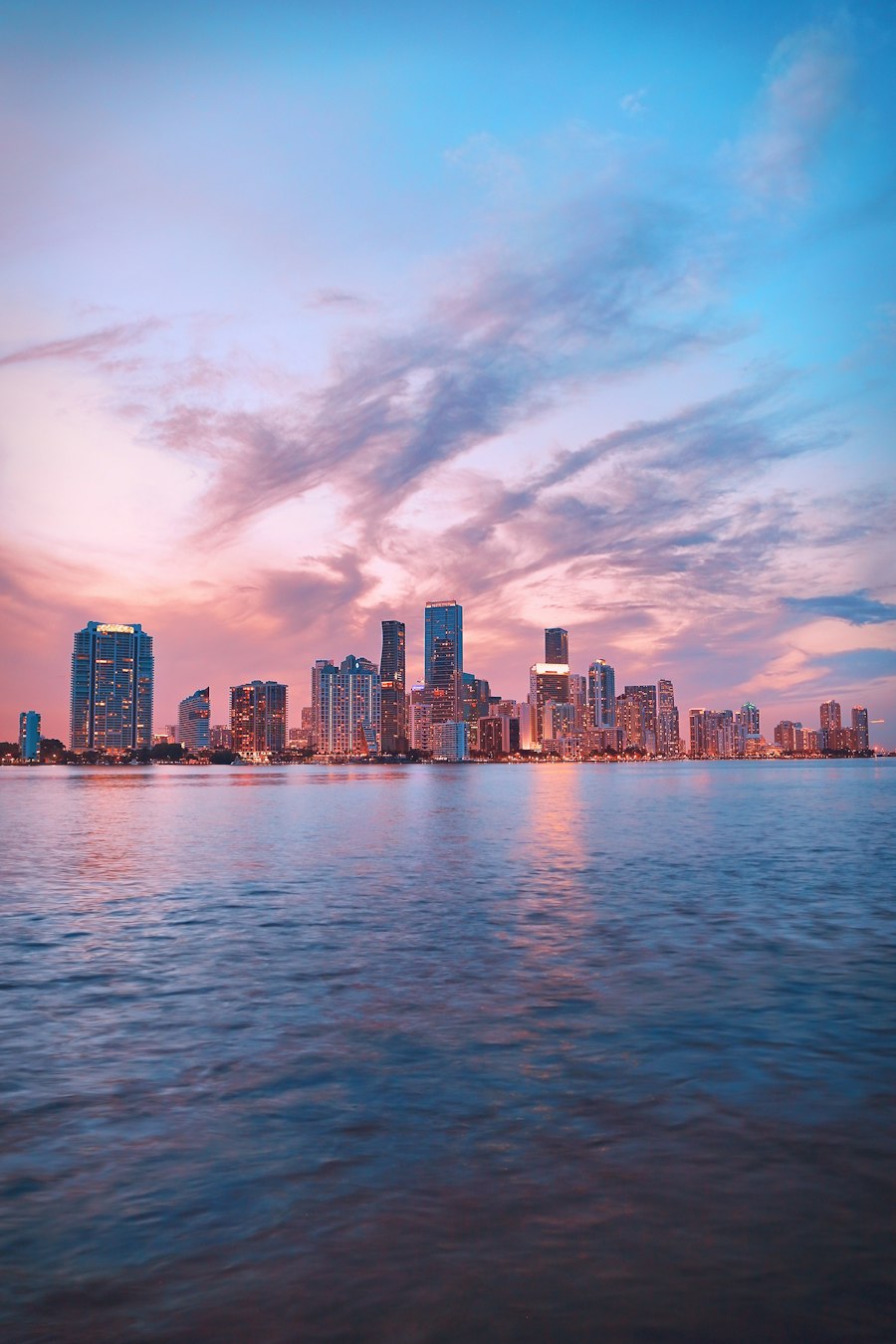
Brickell is Miami's financial district — a dense cluster of glass towers, waterfront restaurants, and the Brickell City Centre mall. It is the neighborhood of choice for finance professionals, tech transplants, and international buyers who want a truly urban lifestyle. The Metromover provides free rail transit to connect Brickell to downtown. Expect to pay $2,200–$3,500 for a one-bedroom in a newer tower.
Wynwood built its identity on street art and has evolved into Miami's creative district — galleries, restaurants, cocktail bars, and a weekly arts scene that draws people from across the metro. Wynwood is walkable by Miami standards, though parking is a battle on weekends. One-bedrooms run $1,800–$2,600. The neighborhood does flood during heavy rain, which is worth factoring in.
Coral Gables is Miami's most elegant established neighborhood — Mediterranean Revival architecture, tree-lined streets, strict development controls that have kept the character intact for decades, and the University of Miami providing institutional stability. It is the premier choice for families with school-age children.
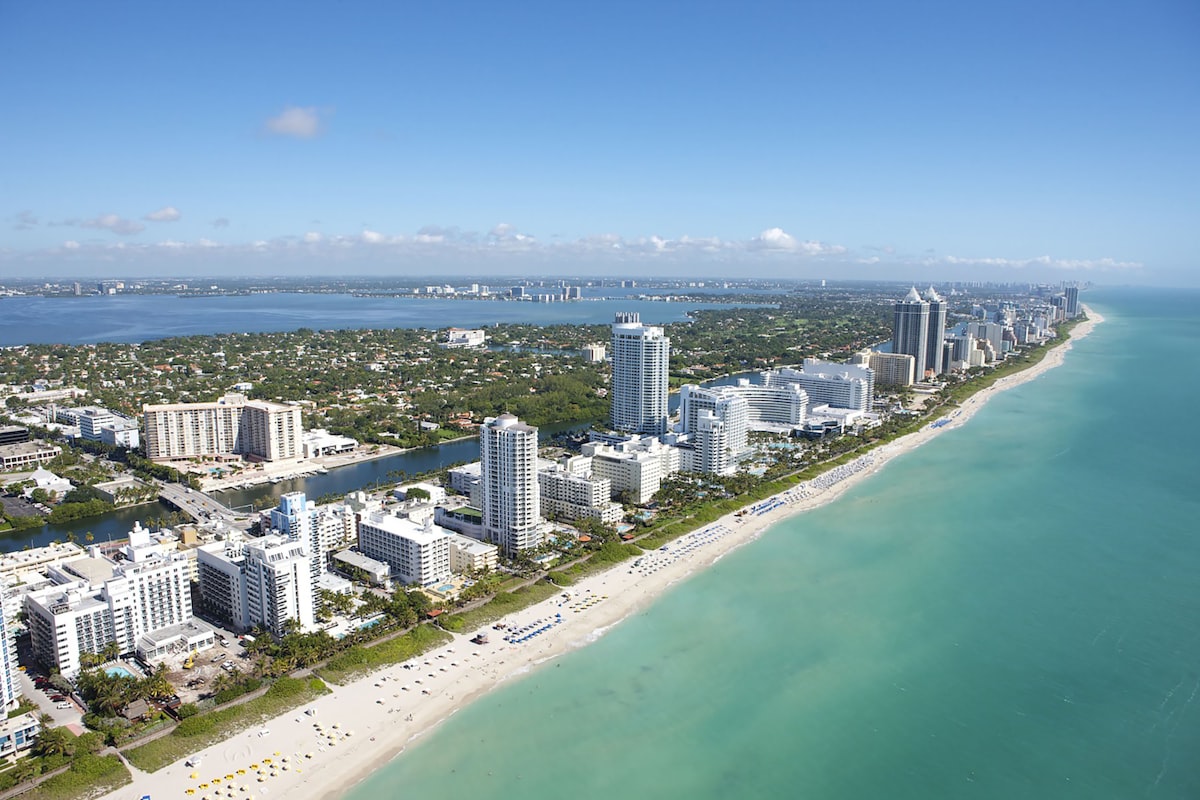
South Beach (Miami Beach proper) is what most people picture when they think of Miami — the Ocean Drive Art Deco strip, the beach, the nightlife. For residents rather than tourists, it offers a walkable, dense urban environment with genuine neighborhood character outside the tourist corridor. It is also an island, which means traffic crossing the causeways to reach the mainland can be significant.
Miami has gotten expensive. The relocation wave of 2020–2022 compressed a decade of housing inflation into two years. Median rent for a one-bedroom in a desirable neighborhood now runs $2,000–$2,800. Condominiums in Brickell and Edgewater have appreciated dramatically. The story that Miami offers coastal living at inland prices is no longer accurate.
Florida's zero state income tax remains a genuine financial advantage, particularly for high earners. Property insurance has become a serious cost factor — Florida's homeowner's insurance market has contracted significantly due to hurricane risk and litigation, and premiums have risen sharply. Budget $3,000–$8,000 annually for homeowner's insurance depending on location and property value.
View the full Miami city profile on The Time Sphere for local time, neighborhood guides, and relocation resources.
Miami's climate is subtropical, not tropical — there is a meaningful distinction. May through October is the wet season, with daily afternoon thunderstorms that arrive fast and clear just as quickly. Humidity during these months is real: temperatures in the low 90s°F feel significantly hotter when the dew point is 75°F. Air conditioning is not optional; it is infrastructure. Budget for it accordingly.
Hurricane season runs June 1 through November 30, with peak activity in August and September. Miami-Dade County has comprehensive evacuation planning and most modern construction is built to current wind codes. The practical preparation for most residents is: know your evacuation zone, maintain a supply kit, carry flood insurance if your property is in a flood zone, and have a plan for your vehicle if a major storm approaches.
Miami is a car city. The Metromover and Metrorail serve limited corridors, and while both are useful within their coverage areas, a car is effectively required for most residents. Traffic on I-95, US-1, and the causeways connecting Miami Beach to the mainland can be severe. Driving in Miami is an acquired skill that rewards patience and defenses against aggressive lane changes.
Comparing Miami with Austin? Both offer no state income tax and warm climates, but Miami's coastal location, international character, and proximity to Latin America give it a distinctly different cultural weight.
Miami runs on EST (UTC−5, UTC−4 during daylight saving) — the same zone as New York and only 5 hours behind London. This makes Miami one of the best US cities for remote workers with European clients. See Miami's current time on The Time Sphere and use the Pro Meeting Planner to find the real-time overlap window with your team in Paris, London, or Madrid.
Miami's best arguments are not made in spreadsheets. The food scene is outstanding — Cuban, Haitian, Colombian, Venezuelan, and Caribbean cuisines at every price point. The art scene, anchored by Art Basel Miami Beach every December, has made the city a genuine destination for contemporary art. The beach is real and accessible. The international energy of a city where Spanish and English coexist as working languages creates a cosmopolitan environment that no inland US city can replicate.
If you can make the economics work, Miami rewards long-term residents with something genuinely rare in American cities: a specific, irreplaceable sense of place.